PAINTINGS AND SCULPTURES
Extract from the book “Feng Shui para todos”, Chapter 2
PAINTINGS AND PICTURES
A work of art — a canvas, a painting or a mural — can enhance or diminish the beauty of a space in a very particular way. A good painting draws light into your home, gives depth, fills a room with strength and optimism, and invites your best thoughts and inspiration. The point is to recognise for yourself what makes a good work of art and what does not. Do not assume a piece is good for you because of its international fame, its price, or how famous the artist is. A work may be technically original or unique in some way, but what should matter to you is the subject and the inspiration it conveys. Imagine buying an important work by a famous painter whose theme is a bloody war, a sad or gloomy figure, a dark and lifeless place — you will find it floods your space with that very feeling.
In most of the studies we carry out, paintings speak of the psychological states people hold within, choosing by affinity the colours and images that mirror their inner condition. The symbolism can be read area by area: a couple's bedroom with mostly paintings of women might suggest that the wife does not relate to her husband, feels alone, or takes up too much of the space — other details will confirm the picture more precisely. Several paintings that repeatedly show three people in a couple's bedroom can encourage, or hint at, some infidelity; if these symbols are echoed in other objects too, look closely at the situation. The feng shui correction is obvious: remove such pictures and put up images whose themes are in harmony.
Beyond the symbolism, an important thing in any painting is the quality of the colours. An abundance of dark shades — thick red, heavy greens, fuchsia, grey, black, or colours without light — is not advisable, as they are associated with low, heavy energies that bring only suffering and difficulty. Disordered, chaotic strokes, or abstract paintings with neither rhyme nor reason, produce confused mental and emotional states. If you own pictures, look carefully at their colours and at what they represent; if they are bad, sell them or clear them out. Always look for light and beauty in a painting, for noble feeling, for images that inspire joy and vitality.
SCULPTURES
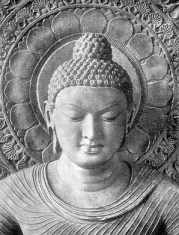
Much of what has been said about paintings applies naturally to sculptures. In the Form School it would be poor advice to display figures that clearly lack harmony. Sculptures showing a maimed or sick body, or one with, as we say, neither rhyme nor reason, create disharmony. Threatening or violent figures can subtly feed conflict and disputes within your family. Busts of gloomy or difficult characters likewise fail to bring the best light to your space — there is much to discover through close observation.
Weigh up the décor of some cultures that use masks or ritual figures; be cautious about placing objects that were used in ceremonies whose meaning you do not know, or that represent strange energies. Some people travel to countries in Africa, bring back frightening masks and end up putting them at the entrance of the house. The truth is that they do not make the best welcome.
A beneficial object, rich in “Sheng Qi”, always shows an intrinsic beauty — the inner cleanliness of the artist, its symbolic quality, and the clear light it brings into your space.
Related: Feng Shui and Decoration · Feng Shui Colours · Order and Cleanliness. To learn to read a space with feng shui, see our professional Feng Shui course.