THE FENG SHUI COMPASS (LUO PAN 罗盘)
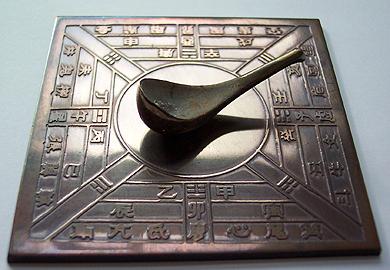
The feng shui compass, or Luo Pan (罗盘), is the instrument we use to measure a building's orientation. This guide covers the common types of compass, the 8 directions and the 24 mountains, and how to take an accurate facing reading.
The classical approach to feng shui can be divided into two main lines of work: on one hand the study of the landscape, with its many forms and features, and on the other the mathematical side that orders them in time and space, where a knowledge of the directions and of terrestrial magnetism is essential. The tool we need in order to find the orientation of a building is, of course, a compass — the subject of this article.
The invention of the compass, like feng shui itself, is attributed to the Chinese. Some texts recall the legend that the Yellow Emperor, Huang-ti, used the basic properties of the compass to guide his troops through a fog that had made everything invisible, around the year 2634 BC.
Its later rediscovery in the West was a great leap forward, one that made possible some of humanity’s most epic voyages.
Using a compass is not especially complicated, though there are a few points to bear in mind if the readings are to be reliable. To measure the facing of a home, for instance, we will usually need to take several readings. If we simply step onto the balcony and note down the degrees the compass shows, with no further checks, we may well end up with incorrect information — something we will come back to later.
Many people coming to feng shui — and in particular to the popular compass systems, whether Ba Zhai or Xuan Kong — are eager to draw up their geomantic chart straight away. This article is meant to give a basic understanding of the measuring process: we will look at the common types of compass, the recommended steps for taking a reading, and how to record the data in a table of orientations.
1 .- COMMON TYPES OF COMPASS
a) With a magnetic needle
The first type works by means of a “magnetic needle”, usually painted in two colours; in the West the convention is red for north and black for south (the magnetic poles). Besides the needle there is a rotating ring, turning through 360 degrees, that is set by hand to read off the degrees. The Luo Pan, or traditional Chinese compass, is an example of this system. Some Chinese compasses, unlike Western ones, use the white end of the needle for north and the red end for south.
The photographs below show the steps for taking a reading with a common compass of this kind. You can find similar models in most outdoor or sports shops.
Example of use:
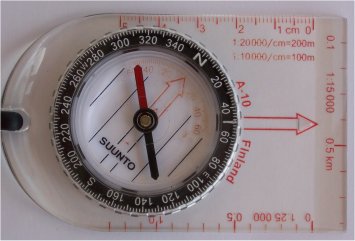
Step 1: The outer red arrow is the reference for the direction we want to measure — for example, the direction the facade of our house faces.
To read the degrees of that direction, we turn the ring carrying the inner arrow until it lines up with magnetic north (the red end of the needle). The next photograph shows the following step.
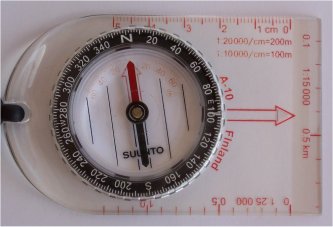
Step 2: We have aligned the red needle (magnetic north) with the inner arrow by turning the ring slightly to the left.
We then read the degrees indicated by the outer arrow. Note that it points to about 100 degrees, which corresponds to the East.
b) Magnetic Disc
Instead of a needle, the second type uses a rotating magnetic disc with the degrees printed on it. This does away with the need to adjust a needle against an outer ring, which is rather more convenient: you simply point the compass in a given direction and wait until the moving disc settles, then read off the degrees. This system is used where manual adjustment is impractical — in aircraft, ships, cars and so on.
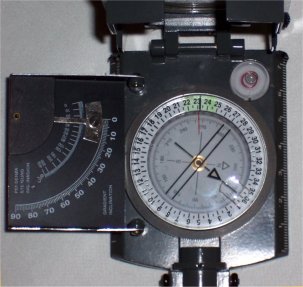
This rotating-disc model is more advanced than the first one. It includes an alignment system, helps in reading slopes, and can be mounted on a tripod to hold the compass perfectly still.
It is a recommended instrument for feng shui readings where some precision is needed. A difference of just a few degrees on a geomantic chart can be decisive for a correct interpretation.
c) The Luo Pan: the traditional compass used in feng shui
The Luo Pan (or Lo'pan) combines a floating needle with an outer plate full of information that is turned by hand. This compass usually has two threads crossing the plate into four sections, giving a precise, simultaneous reading of the facing, the sitting and the two side positions — the four animal protectors of feng shui. There are different kinds of Lo'pan, differing mainly in the rings they carry: traditional models for the San Yuan or San He branches, as well as ones made to the preferences of particular masters.
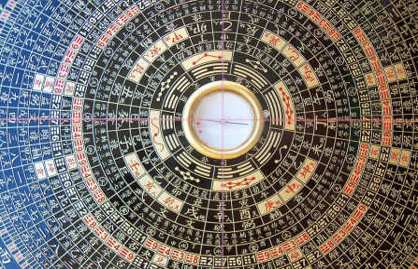
As we can see, besides the central magnetic needle there are several concentric rings filled with information. They carry such elements as the eight trigrams (八卦), the eight directions, the 24 directions or mountains, and astrological data such as the 28 constellations, the Heavenly Stems and the Earthly Branches, along with many other concepts used in the art of feng shui.
Some of the rings of the traditional Luo Pan belong to the “Yin” field of feng shui, concerned with burials and the siting of tombs. Today most masters focus on the “Yang” field, that is, the study of the dwellings of the living — houses, shops and so on.
Besides the analogue compasses above, there are now digital compasses that give a quick reading; but out in remote, inhospitable places the classic compass has one clear advantage — it never runs out of power.
2.- WHICH COMPASS SHOULD I ACQUIRE?
So far we have looked at several compasses in ascending order: from an affordable needle compass, through a mid-range rotating-disc model, up to the Luo Pan. If you want to buy a compass that offers some guarantee of a good reading, here are a few things to consider:
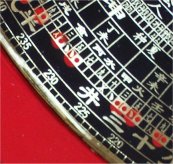
One thing to consider is the scale, or precision of the degrees: the finer the scale, the more exact the reading. The usual recommended minimum is a 2-degree scale, while for professional work a scale of 1 degree, or even ½ degree, is preferable.
Here a decent Luo Pan helps towards an accurate reading, thanks to the width of its plate (see photo).
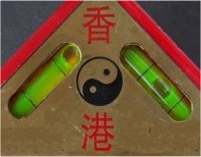
Another feature, distinctive though not essential, is a built-in vertical and horizontal level, meant to help the magnetic needle move freely.
Note: in practice, what really matters is that the magnetic needle floats freely. The levels may be perfectly set and yet the needle stuck, so the best advice is to watch the movement of the needle itself and not worry too much about the levels.
If you are buying a Lo'pan, it is also wise to check the exact alignment of the threads that cross the plate — that they are truly parallel in the north–south (0–180 degrees) and east–west (90–270 degrees) sections. Check too that the plate turns smoothly, and above all that the inner needle is of good quality; these last points matter most for accuracy. For Western compasses, look for a brand of proven quality with a clearly legible scale.
A small investment in a quality compass is worthwhile: in the end, its accuracy — and the good use you make of it — can be the difference between a correct feng shui chart and a mistaken one.
3 .- THE BASIC THEORY OF THE CARDINAL DIRECTIONS
The ordinary compass is divided into 360 degrees. How many degrees, then, does each of the four basic directions occupy? We simply divide 360 by 4, and find that north, south, east and west each span a 90-degree sector. On this scale north runs from 315 to 45 degrees, east from 45 to 135, south from 135 to 225 and west from 225 to 315. For a finer scale we use eight sectors instead — 360 divided by 8, that is 45 degrees each. See the calculated table below.
The 8 basic directions:
| Direction | Degrees | Trigram |
|---|---|---|
| North | 337,5 a 22,5 |  Kan |
| Northeast | 22,5 a 67,5 |  Gen |
| East | 67,5 a 112,5 |  Zhen |
| Southeast | 112,5 a 157,5 |  Xun |
| South | 157,5 a 202,5 |  Li |
| Southwest | 202,5 a 247,5 |  Kun |
| West | 247,5 a 292,5 |  Dui |
| Northwest | 292,5 a 337,5 |  Qian |
Notice that here north does not end at 45 degrees but at 22.5. This is because absolute north (360/0 degrees) is split into two halves of 22.5 degrees on either side. On the eight-sector scale, north therefore runs from 337.5 degrees round to 22.5. The other directions follow in consecutive intervals of 45 degrees.
The 24 directions or mountains:
The 24 mountains (二十四山) come from dividing the 360 degrees into 24 points, giving 24 sectors of 15 degrees each. Each of the eight basic directions is split into three, so we have South 1, South 2, South 3, North 1, North 2, North 3, NW1, NW2, NW3, and so on. The 24 mountains are used for advanced readings in the Xuan Kong Feng Shui system, while the table of eight directions is used in the simplified East/West system, or Ba Zhai branch (Eight Houses).
The following table shows the pre-calculated ranges of the 24 mountains:
The 24 mountains of the Luo pan - The Xuan Kong Fei Xing System
| Mountain | Direction | Ideogram of the Luopan | Pin Yin | Facing degrees | Pin yin | Seating degrees |
|---|---|---|---|---|---|---|
| 1 | N1 | Ren | 337,5 – 352,5 | Bing | 157,5 – 172,5 | |
| 2 | N2 | Zi | 352,5 – 7,5 | Wu | 172,5 – 187,5 | |
| 3 | N3 | Gui | 7,5 – 22,5 | Ding | 187,5 – 202,5 | |
| 4 | NE1 | Chou | 22,5 – 37,5 | Wei | 202,5 – 217,5 | |
| 5 | NE2 | Gen | 37,5 – 52,5 | Kun | 217,5 – 232,5 | |
| 6 | NE3 | Yin | 52,5 – 67,5 | Shen | 232,5 – 247,5 | |
| 7 | E1 | Jia | 67,5 – 82,5 | Geng | 247,5 – 262,5 | |
| 8 | E2 | Mao | 82,5 – 97,5 | You | 262,5 – 277,5 | |
| 9 | E3 | Yi | 97,5 – 112,5 | Xin | 277,5 – 292,5 | |
| 10 | SE1 | Chen | 112,5 – 127,5 | Xu | 292,5 – 307,5 | |
| 11 | SE2 | Xun | 127,5 – 142,5 | Qian | 307,5 – 322,5 | |
| 12 | SE3 | Si | 142,5 – 157,5 | Hai | 322,5 – 337,5 | |
| 13 | S1 | Bing | 157,5 – 172,5 | Ren | 337,5 – 352,5 | |
| 14 | S2 | Wu | 172,5 – 187,5 | Zi | 352,5 – 7,5 | |
| 15 | S3 | Ding | 187,5 – 202,5 | Gui | 7,5 – 22,5 | |
| 16 | SO1 | Wei | 202,5 – 217,5 | Chou | 22,5 – 37,5 | |
| 17 | SO2 | Kun | 217,5 – 232,5 | Gen | 37,5 – 52,5 | |
| 18 | SO3 | Shen | 232,5 – 247,5 | Yin | 52,5 – 67,5 | |
| 19 | O1 | Geng | 247,5 – 262,5 | Jia | 67,5 – 82,5 | |
| 20 | O2 | You | 262,5 – 277,5 | Mao | 82,5 – 97,5 | |
| 21 | O3 | Xin | 277,5 – 292,5 | Yi | 97,5 – 112,5 | |
| 22 | NO1 | Xu | 292,5 – 307,5 | Chen | 112,5 – 127,5 | |
| 23 | NO2 | Qian | 307,5 – 322,5 | Xun | 127,5 – 142,5 | |
| 24 | NO3 | Hai | 322,5 – 337,5 | Si | 142,5 – 157,5 |
This will help you place the degrees of a reading within one of the 24 directions. If your house faces 180 degrees, we would say it faces S2 (172.5–187.5), “Wu” on the Luo Pan — or simply “South” on the eight-position scale.
4.- FACING AND SEATING OF A BUILDING
Now that we have an idea of the most common types of compass and of how to organise the information from a reading, we need a reference point for the feng shui analysis. The most common one is the building's main facing.
In feng shui the facing is regarded as the most important zone, the one through which Qi enters the space. In a city flat, for instance, the facing is often at the main living-room windows, the balcony overlooking a busy street, or the side with the best views, while the front door may point in an altogether different direction. So avoid the common mistake of automatically equating the front door with the facing — even if the two do coincide in most classical buildings and in rural areas.
More technically, the facing or “front” is the most Yang part of the house — the bright, active side through which Qi is channelled in. That flow of Qi depends on openness and on the absence of obstacles. The sitting is the side opposite the facing, and in some feng shui systems this facing–sitting axis is what defines the type of house.
5.- THE PROCESS OF READING
Once we have identified the place to be read (the facing, in this example), we need to position ourselves correctly to take its degrees.
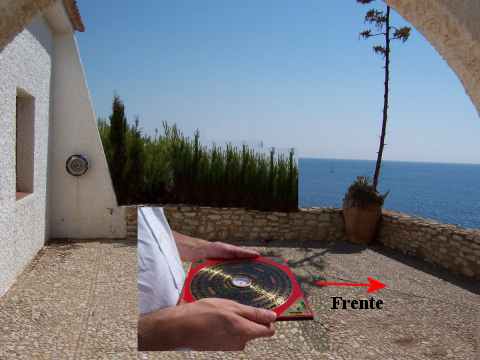
Imagine that the front of the house we are studying looks out to sea (the side with the widest views, the large windows, the movement, and so on). To take the measurement we stand with our back parallel to the facade and our face towards the sea.
The photo composition above shows clearly the physical position for taking the reading, adjusting the compass or Luo Pan to read the facing.
Do not forget the precautions needed for a reliable reading; the section below gives some final instructions.
6.- PRECAUTIONS FOR READINGS
A very common mistake when starting out is to take readings indoors and trust them, without realising they can be completely wrong. The reason is the magnetic disturbance of the modern world — nearby metal, structural elements such as beams, pipes and wiring, and even electromagnetic pollution. It is best to go outside and take several reference readings along the facade. Sometimes, as well as reading the facade, you should compare it with the sitting or back of the building, checking that the two are consistent: if the facade reads 90 degrees (east), the sitting should read around 270 degrees (west).
Without these precautions the reading may be inaccurate, and that in turn ruins the mathematical formulas used to analyse and correct a geomantic chart. Avoid taking measurements while wearing sizeable metal objects, or too close to cars, lampposts and other things that pull a compass off; and do not rest it on the ground, where buried elements often disturb the magnetism.
7.- HELP FOR CALCULATING THE STAR CHART
If you are working on a consultation from a distance, make sure the reading has been done carefully and correctly — otherwise there is a real risk of building everything on faulty figures.
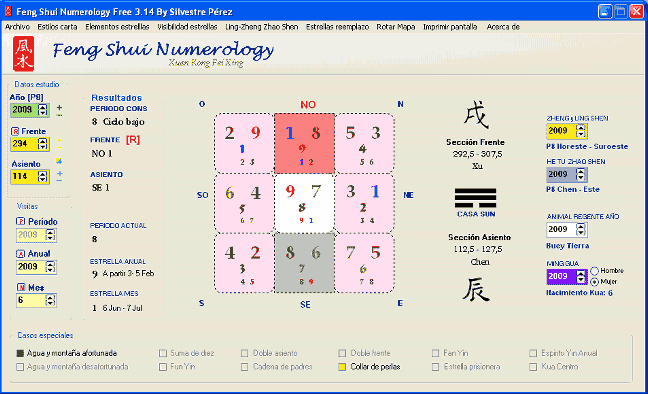
Once the reading is done, the next step is to draw up the geomantic chart. We put our Feng Shui Numerology software at your disposal, free of charge, to help you build and analyse a Xuan Kong Fei Xing chart.
The program shows each of the 24 mountains and how it relates to each magnetic sector of the compass: the trigram of the house, the period, mountain and water stars, and the visiting stars of the year, the month and the period. Special cases in the various Xuan Kong charts are highlighted by colour.
Finally, you can save and reload your work, and even create and keep your own visual styles.
Related: The Five Elements (Wu Xing) · Schools of Feng Shui · Yin and Yang. To learn to read a compass and apply feng shui professionally, take a look at our professional Feng Shui course.