MIRRORS IN FENG SHUI
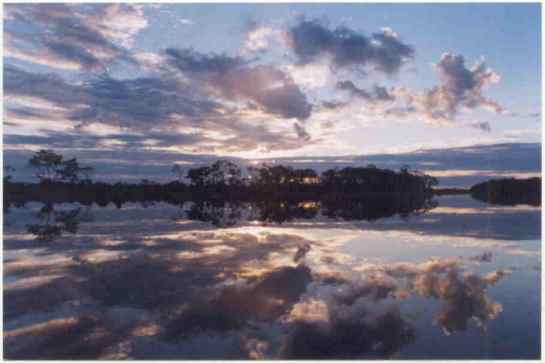
Opinions on mirrors differ widely in feng shui. Some authors use them freely to solve all sorts of problems — critics call this the “aspirin object” — while others dismiss almost any feng shui use of them. The truth probably lies somewhere in between.
A mirror has very clear properties in a space: it creates a virtual room and reflects light. Interior designers know well how effective it is for hiding columns, enlarging a small space or increasing its brightness. To claim that these uses are of no interest to feng shui would be to ignore an obvious function in relation to space — and space is central to this art. We should also remember that, for some practitioners of traditional feng shui, there are references to how these objects interact with a Flying Stars (Xuan Kong) chart. So it makes good sense to treat mirrors as one more element in feng shui.
Here are some general guidelines about mirrors, so that you can judge for yourself.
Indoors, try not to reflect figures, pictures or anything with bad feng shui, since a mirror would amplify their “virtual” presence in the space. The sensible thing is to remove objects with bad feng shui; but where the reflection falls on a fire, an awkward staircase, a hostile corner or something similar, you would have to remove or reposition the mirror.
Broken or distorted mirrors are best avoided, as are bevelled ones, or any with lines on the surface that cut or duplicate the image. The old superstition that breaking a mirror brings bad luck comes from the belief that a broken or damaged surface distorts energy. To avoid the seven years of bad luck you need not call in a witch — you just have to replace the broken mirror with a new one.
Mirrors with grey or dark blotches are not recommended indoors, because they resemble dark, gloomy doorways and give the room a murky feel. Mirrors can be used to widen hallways, or to amplify things with good feng shui such as certain pictures, sculptures and landscapes. If you use a mirror to look at yourself or tidy up, make sure the view is comfortable — that you do not have to stand on something, stoop, or contend with a distorting surface.
Very old mirrors are not the best choice, especially if they have belonged to places or people with bad feng shui; some esoteric traditions credited the mirror with the power to capture or store information.
Do not place mirrors facing your front door, as the feeling is of projecting the incoming Qi straight back to where it came from. They are also unwelcome when they reflect the bed directly, for it is as though you were permanently exposed to a draught (a window), and sleep calls for orderly, peaceful energy. Opinions differ, but by creating depth a mirror pushes away the sense of stability that is so important for sleep. Try walking on a surface like that and you will feel as if you might fall into the void; where this feeling is strong or striking in a bedroom, we can speak of reduced stability.
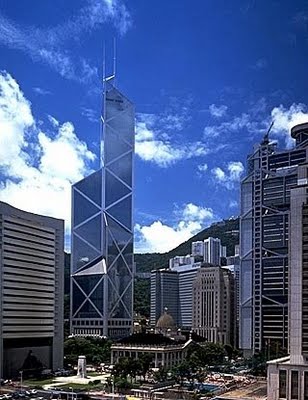
Notice the sharp, triangular structure rising menacingly over its surroundings: it is the imposing Bank of China Tower in Hong Kong. Many local business people, and even the governor, sought advice from feng shui experts to soften the strong presence of this building on their own. A controversial and fascinating building at once, designed by the architect I. M. Pei.
Some schools use mirrors to deflect aggressive influences from the surroundings, though one should always explain, or weigh up, where that energy is being projected. For this reason some teachers advise against their use.
What happens when a kind of Qi is unpleasant and we set our intention to divert it elsewhere with a mirror? Whatever the real value of the practice, it is better to seek responsible solutions in the handling of energy and mental intention, since Qi follows thought — and there is an old, good saying: “Treat others as you would like to be treated.”
As for the powers of “repulsion” attributed to mirrors, we should be cautious about using them as remedies for electromagnetism, mobile-phone masts, electric fields and other influences that pass through the mass of reflective glass. Use, as always, a good dose of common sense.
If you would like more on the parallel, more esoteric side of mirrors, read the sixth chapter of “The Fire from Within” by Carlos Castaneda (Gaia). You will find curious links between the flow of water, depth, and the mirror as a window.